
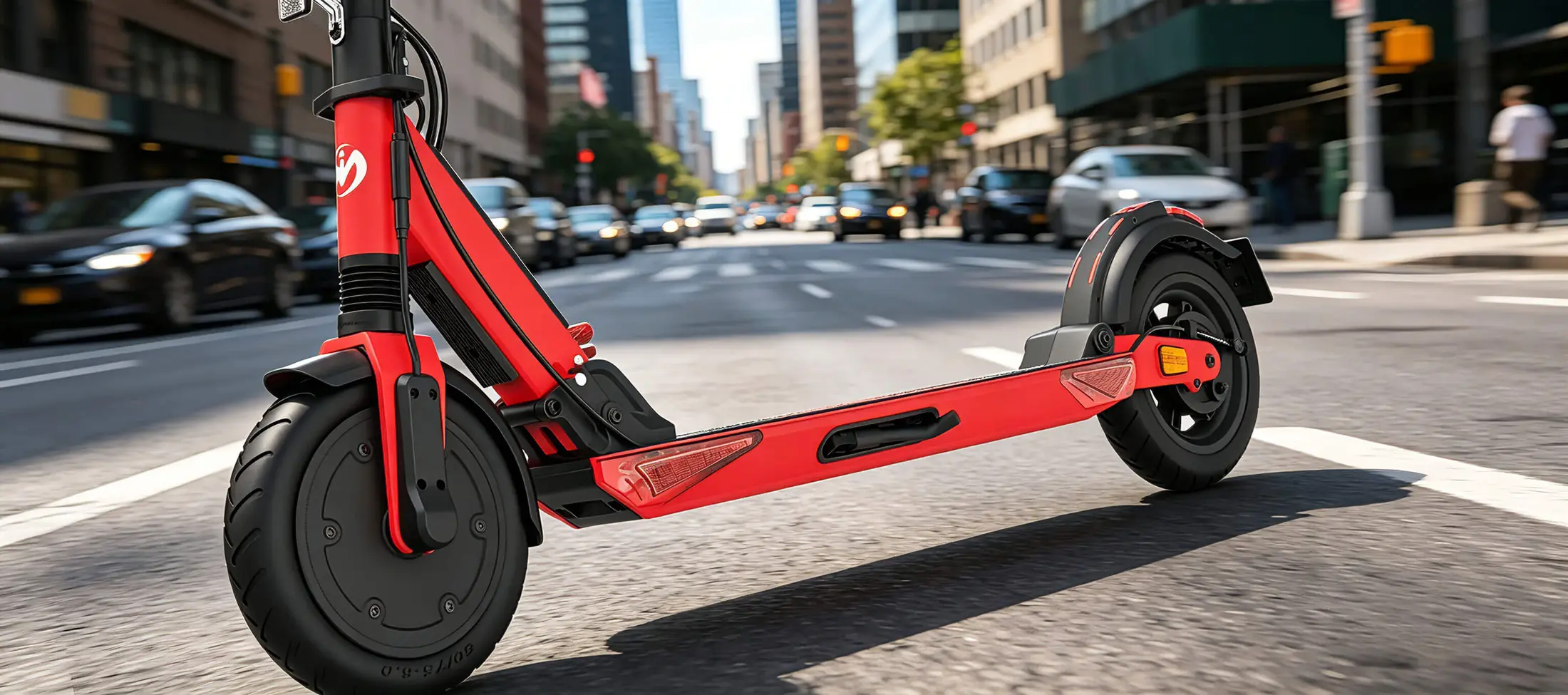
Since May 1, 2026, more precise rules for e-scooters have applied in Austria. Particularly important are the new helmet requirement for those under 16, mandatory indicators on the ends of the handlebars, a bell or horn and the alcohol limit of 0.5 per mille. The limits of a maximum of 25 km/h design speed and a maximum of 600 watts of power remain.
Due to its design, an e-scooter for public transport areas in Austria may reach a maximum of 25 km/h and produce a maximum of 600 watts. Since May 1, 2026, bells or horns and indicators have been required on the ends of the handlebars. Anyone under 16 must wear a helmet.
What’s new since May 1, 2026?
E-scooters are now expressly considered vehicles within the meaning of the road traffic regulations. The rules of conduct that apply to cyclists remain fundamentally relevant, but are supplemented by specific requirements for e-scooters.
- Helmet: Anyone under 16 years of age must wear a helmet when riding.
- Blinker: Yellow flashing lights to the front and back are required at the ends of the handlebar grips.
- Acoustic signal: A bell or horn is mandatory.
- Alcohol: The limit is 0.5 per mille.
- No takeaway: A second person is not allowed to ride on the e-scooter.
- Freight transport: Loose bags on the handlebars and larger transports are prohibited. Only one small item in a suitable, securely mounted container is permitted.
Traffic rules can be changed. If you have detailed legal questions, always check the current information from the federal government and the specific signage on site.
What do 25 km/h and 600 watts mean?
What is important is not just the speed that is currently shown on the display, but also the design speed and the maximum permissible power of the vehicle. A model that was technically designed for higher values or that was subsequently unlocked may therefore fall out of the e-scooter definition.
If you want to buy a scooter, you should have the specific variant confirmed in writing. Model names alone are not enough because manufacturers or retailers can offer similar models with different controllers, software versions and performance values. You can find out more about this in the article Making e-scooters faster and tuning in Austria.
Where can you ride an e-scooter?
If there is a cycling facility, it must always be used and the direction of travel must be adhered to. You can also ride where cycling is allowed. Driving in pedestrian zones is only permitted if the authorities allow it; the speed must be adapted to pedestrian traffic there.
Sidewalks and footpaths may not be used in a longitudinal direction. Special consideration is required on residential streets and meeting areas. Signage, temporary closures and local traffic management always have priority.
Equipment check for 2026
| Component | requirement | Practice check |
|---|---|---|
| Brakes | Effective braking device | Check the braking effect briefly before each journey |
| Bell or horn | Mandatory | Must be easily accessible and audible |
| Blinker | Yellow, visible on the handlebar ends, front and back | Check function and visibility |
| Reflector | White on the front, red on the back, yellow on the sides | Keep clean and check for damage |
| Light | In the dark and poor visibility: white at the front, red at the back | Check battery and light function before departure |
What should you check before buying?
- Is the specific variant specified with a maximum design speed of 25 km/h and a maximum of 600 watts?
- Are there indicators on the handlebar ends, a bell or horn, lights and reflectors?
- Are data sheet, operating instructions, invoice and serial number available?
- Are there spare parts and accessible service for tires, brakes and electronics?
- Is the weight, range and load capacity suitable for daily use?
A CE marking alone does not answer every question about permitted use on public traffic areas. The specific vehicle design is crucial. Our more detailed Buying guide for Austria helps with comparison.
Frequently asked questions
Do adults in Austria need a helmet?
A legal requirement to wear a helmet has been in effect for people under 16 since May 1, 2026. Regardless of this, a suitable helmet is also a useful protective measure for adults.
Can a second person travel with you?
No. Taking another person with you on an e-scooter is not permitted.
Can I ride on the sidewalk?
No, driving along sidewalks and walkways in a longitudinal direction is generally prohibited.
Are indicators now mandatory?
Yes. Yellow flashing lights are required at the ends of the handlebar grips, which flash visibly to the front and rear.